
You spray a fig scent expecting something fresh and Mediterranean, then get either snapped stems and crushed leaves or a creamy, almost dessert-like softness. That split is the whole story with fig perfumes. Buyers are rarely reacting to the same thing, even when the bottle says “fig” on the front.
My position is straightforward: if you are testing fig for the first time, start with the greener side before you buy a creamy one. Coconut-milk fig is easier to over-romanticize from note lists, and easier to regret on skin.
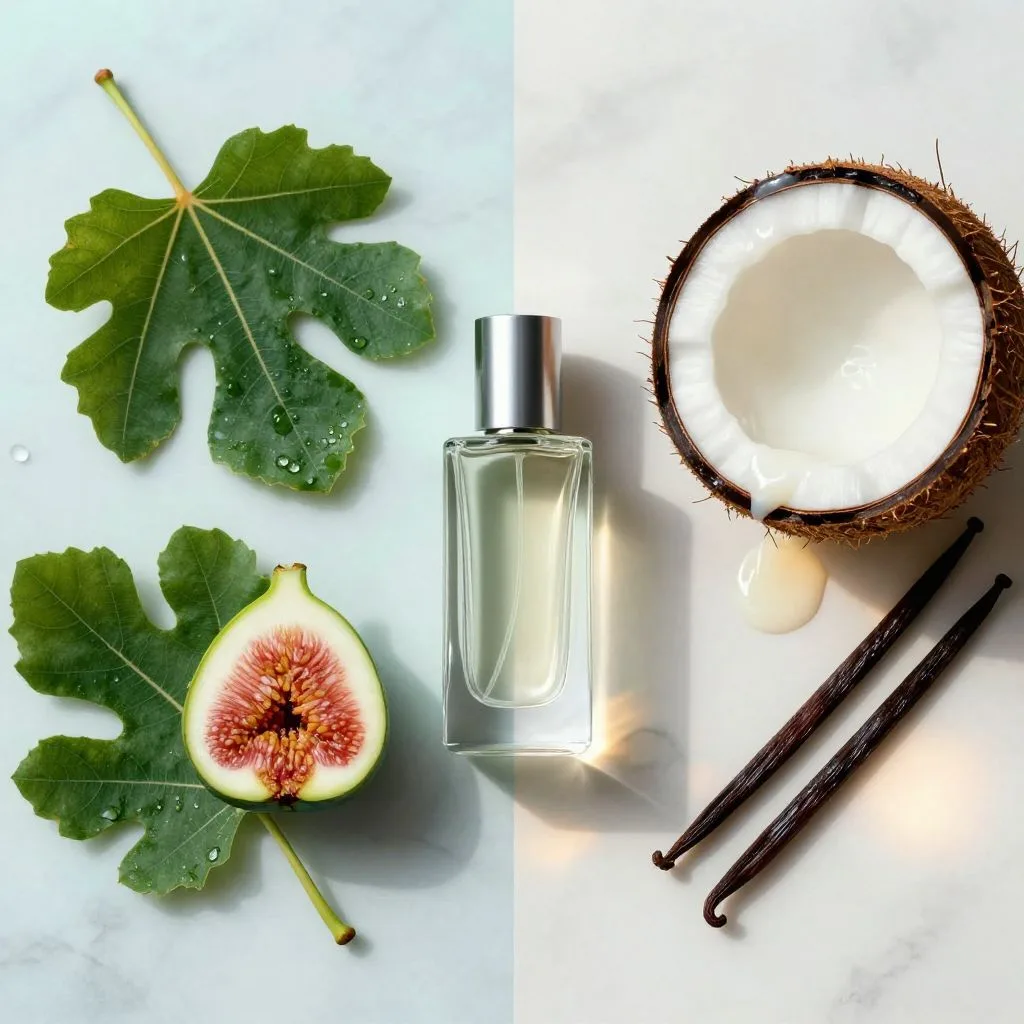
Why fig perfumes rarely smell like one single fruit
Fig is not a neat perfume note. Perfumers usually build it from pieces: green leaf effects, milky lactones, soft woods, coconut facets, and sometimes a faint fruit skin sweetness. The result can lean sharp and vegetal or smooth and plush.
This is why fig perfumes create such divided reactions. One bottle highlights the tree. Another highlights the flesh. A third goes after the sap.
Diptyque Philosykos, first released in 1996, is still the reference point because it shows the whole tree more than the jammy fruit. By contrast, some modern fig compositions push creaminess so hard that the fig impression starts slipping toward suntan lotion, rice pudding, or a soft tropical skin scent.
That is not a flaw by itself. But it is a different promise.
Green leaf fig perfumes appeal to buyers who want texture, not dessert
The green camp usually wants fig as atmosphere. They want the snap of leaves, dry bark, airy sap, maybe a little pepper or cedar. The pleasure is in contrast - cool shade, bitter green edges, and a drydown that stays breathable.
Philosykos Eau de Toilette is the classic example. It often wears lighter, woodier, and more transparent than cream-forward fig scents. Premier Figuier from L'Artisan Parfumeur also helped define this style, especially for buyers who like a leafy opening more than a sugary one.
These wear well in heat. Two to four sprays is usually enough. Push beyond that and the green bitterness can turn scratchy, especially indoors.
The trade-off is obvious. Green fig can read aloof. On very dry skin, it may fade into a faint woody skin scent after 4 to 6 hours, while a creamier formula can hold on longer.
- Best for spring and hot weather
- Usually safer in offices
- Better if you dislike overt gourmand notes
- Can feel too thin if you want comfort
Coconut milk fig perfumes attract buyers chasing softness and body
The other camp wants fig to feel rounded. They are responding to the milky side - lactonic, smooth, slightly sweet, and often paired with sandalwood, musk, or vanilla. “Coconut milk” in this context does not always mean literal beach coconut. It often means a creamy texture that makes the fig feel edible or skin-like.
BDK Gris Charnel is not a pure fig scent, but it is useful here because it shows how creamy woods and cardamom can create the kind of plush effect that fig lovers on this side usually chase. Some fig-forward niche releases also lean into this with coconut, tonka, or soft amber support, which makes them fuller and more immediately comforting.
This style tends to sell well in cooler weather and for evening wear. It also gets blind-bought more often, because note pyramids make it sound irresistible: fig, coconut, sandalwood, musk. On paper, that looks easy.
On skin, though, creamy fig is less forgiving. The same lactonic accord that feels expensive and enveloping on one person can go waxy, sour, or shampoo-like on another after 30 minutes.
And here is the non-obvious part: stronger softness can make a scent feel louder, not quieter. Creamy accords sit close in projection sometimes, but they create a denser scent cloud in small rooms.
How to tell which side of fig perfumes you actually like
Do not trust the word “fig” alone. Test for texture first.
A good store trial needs time, not just a first sniff on paper at Sephora, Liberty, or a niche counter. Give a fig scent at least 45 minutes on skin. The opening often misleads. Green fig can soften beautifully after the leafy bite, and creamy fig can become far sweeter than it seemed in the first five minutes.
Use this quick filter:
- You probably prefer green fig if you like tomato leaf, galbanum, vetiver, cedar, or the airy side of Hermès Jardin scents.
- You probably prefer coconut-milk fig if you enjoy sandalwood, musks, soft vanilla, rice-like creaminess, or the comfort of a skin scent that feels rounded.
- You should skip blind-buying if “milky” notes have gone sour on you before.
- You should start with a decant if the bottle is over $150 for 75 ml.
The safer first purchase for most beginners is a greener fig. It shows the idea more clearly. Creamy fig is more style-specific and easier to misread from online descriptions.
Why note lists cause so much confusion around fig perfumes
Retail descriptions flatten the difference. “Fig, coconut, woods” can mean a breezy tree scent or a velvety, lactonic cloud. Brands are selling mood, not diagnostic accuracy.
Even concentration names do not solve it. An eau de parfum version may last longer, but longer wear does not mean more realistic fig. Sometimes it just means more musk, more cream, and less of the leaf that made the opening interesting.
That is why disappointed buyers end up talking past each other. One wanted a fruit. One wanted a tree. One wanted cashmere.
Should you choose green fig or coconut milk fig first?
Choose green first unless you already know you love lactonic scents.
Green fig gives you the clearest read on whether the fig idea itself works for you. It is usually more versatile, less claustrophobic in heat, and easier to wear from daytime into evening. Creamy fig can be beautiful, but it is a narrower lane and a riskier blind buy.
I've noticed fig fans are often not really fig fans at all. They are leaf fans, or milk fans, using the same word for two different cravings - so which one are you actually hoping to smell when you reach for that bottle?