
Spray two sweet perfumes on paper in a store and they can blur together fast. One smells fluffy, one smells creamy, one smells warm and almond-like, but under bright retail air and the first 30 seconds of alcohol lift, marshmallow, vanilla, and tonka often get flattened into the same idea: dessert.
That is where bad buys start. In gourmand perfume, these three notes do very different jobs on skin, and the difference matters more in hour three than minute one. A marshmallow scent can feel airy and powdered. A vanilla-heavy perfume can turn dense, buttery, or woody. A tonka-driven drydown can read less like frosting and more like toasted hay, almond, tobacco, or coumarin warmth.
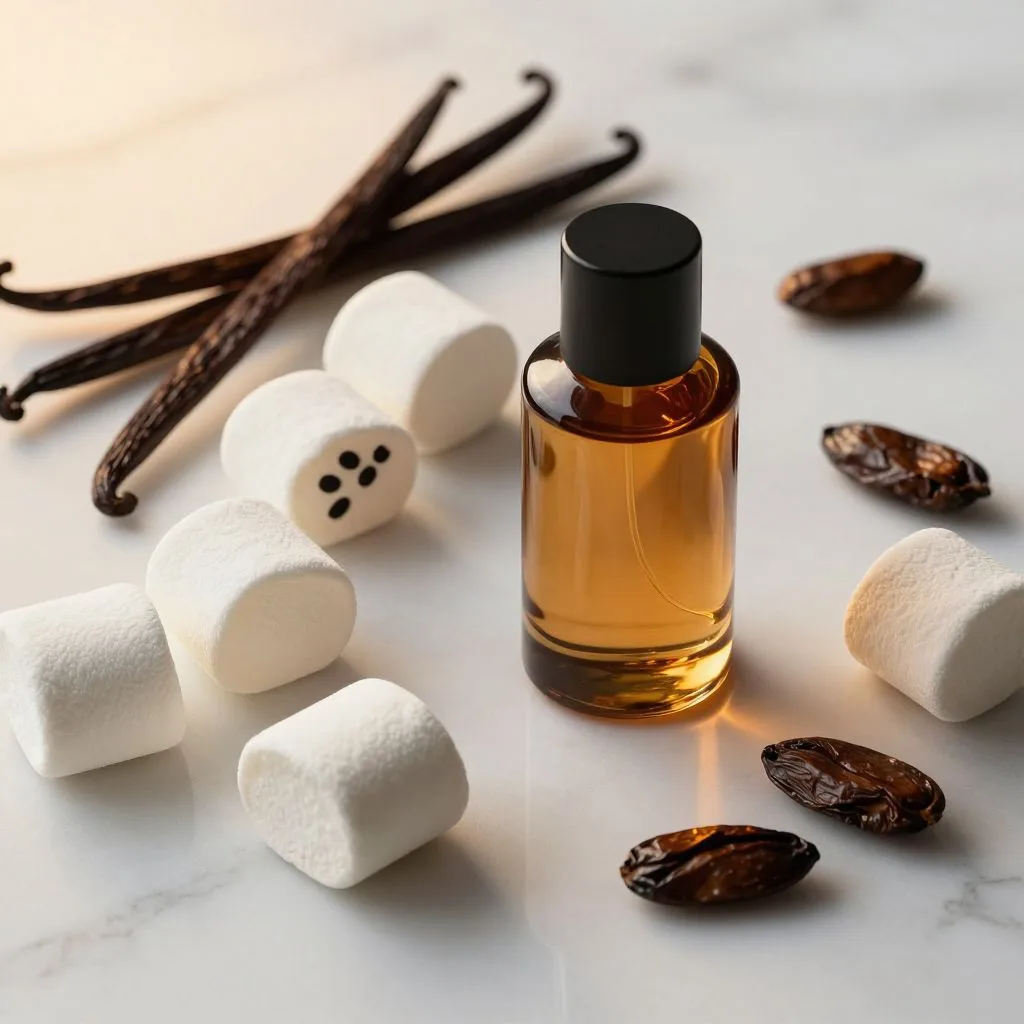
The practical recommendation is straightforward: if you are choosing from a store tester, do not decide by the opening. Give marshmallow, vanilla, and tonka at least 20 to 30 minutes on skin before calling them interchangeable.
Why marshmallow in gourmand perfume usually feels lighter than vanilla
Marshmallow is rarely a literal melted-sugar note. In perfume, it usually suggests a texture. Think powdered sugar, soft musk, vanilla dust, and a pastel sweetness that sits above the skin instead of sinking into it. Even sweet marshmallow perfumes can feel airy.
Kilian Love, Don’t Be Shy is a useful example. Its orange blossom and sugary puff effect make it feel plush and candied, but not in the same way as a heavy vanilla extract style scent. Maison Margiela Replica By the Fireplace also has sweetness, yet it does not smell marshmallow-led for long because smoke, woods, and chestnut pull it downward and darker.
This is the first big difference store testers hide. On blotter, marshmallow can seem louder than it wears. On skin, it often turns into a halo effect. Pleasant. Cozy. Sometimes disappointingly sheer.
The trade-off is clear: marshmallow usually feels more playful and easier to wear in daylight, but it may give less depth and less lasting richness than a true vanilla or tonka structure.
Vanilla in gourmand perfume can shift from ice cream to wood varnish
Vanilla sounds easy. It is not.
In perfume, vanilla can smell like frosting, custard, benzoin, boozy extract, dry wood, lipstick sweetness, or resin. A store strip rarely shows that full arc. The opening may read sugary and familiar, then the drydown pulls smoky, balsamic, or even slightly dusty depending on the formula.
Guerlain Spiritueuse Double Vanille is a good reference point for why vanilla is bigger than “sweet.” It carries rum, incense, and woody warmth, so the vanilla feels textured and adult. Kayali Vanilla 28 pushes a denser brown-sugar and amber profile. Neither smells like marshmallow after an hour, even if the first spray can suggest a similar dessert direction to an untrained nose.
Vanilla also tends to stick. On moisturized skin, a richer eau de parfum can stay present for 6 to 8 hours, sometimes longer on fabric. That persistence is useful, but it creates a common buying mistake: a vanilla perfume may seem friendly in store and then feel too thick in a heated office or crowded restaurant.
The non-obvious part is this: stronger sweetness does not always smell more edible. Dense vanilla often smells less like candy than marshmallow does, because woods, balsams, and patchouli pull it away from confectionery territory.
Tonka in gourmand perfume is usually the note people misread most
Tonka gets mistaken for vanilla all the time because both feel warm and sweet. They are not interchangeable. Tonka usually brings coumarin facets - almond, hay, toasted sugar, light tobacco, and a dry, almost brushed-suede warmth.
That dryness matters. Tonka can make a gourmand smell more elegant or more masculine-leaning without making it less sweet. It smooths edges. It also cuts through sticky sugar effects better than vanilla does.
Parfums de Marly Oajan shows this well. It is sweet, spiced, and rich, but the tonka effect keeps it from collapsing into syrup. Guerlain Tonka Impériale, built around tonka with bitter almond and tobacco-like shading, shows the note in a more direct way. These do not wear like marshmallow scents, even though a fast tester sniff may file them under the same broad gourmand shelf.
Tonka’s limitation is also practical. Some wearers expecting bakery sweetness end up disappointed because tonka can smell drier, darker, and less edible than the word “sweet” suggests. On blotter it can look soft. On skin it can turn decidedly sophisticated.
How store testing hides the real difference between marshmallow, vanilla, and tonka
Retail testing favors openings. Gourmands reveal themselves in the drydown.
Department store air, scent saturation, and paper strips all compress texture. Paper also overstates sparkle and understates warmth. Marshmallow can seem louder than it is. Vanilla can seem simpler than it is. Tonka can seem sweeter than it is.
A better test is clinical and short:
- Spray one perfume on each wrist.
- Use no more than 1 spray per spot.
- Wait 20 minutes before comparing.
- Check again at 2 hours.
- Do not test after scented hand cream.
If possible, test near a retailer like Sephora or Nordstrom and then leave the fragrance hall. Fresh air helps. So does distance from ten other atomizers going off nearby.
This is where the buying decision usually gets easier. Marshmallow stays fluffy or fades. Vanilla expands. Tonka settles and adds shape.
Which note should you choose for the result you actually want?
Choose marshmallow if you want sweetness that feels soft, youthful, and relatively transparent. It suits daytime wear, casual dates, and people who want a gourmand that does not sit like syrup on the skin.
Choose vanilla if you want the richest payoff and the clearest sweet identity. It usually gives the best sense of fullness, especially in cooler weather, but it is also the easiest to overshoot with 3 or 4 sprays indoors.
Choose tonka if you want sweetness with polish. Tonka is the best option for someone who likes gourmand perfume but dislikes smelling like literal dessert.
For most buyers deciding from one store test, tonka is the safest blind direction only if the goal is warmth without obvious sugar. Vanilla is the best pick for a true gourmand wardrobe. Marshmallow is the easiest to like quickly and the easiest to outgrow.
Do marshmallow and vanilla smell the same in perfume?
No. Marshmallow usually reads fluffier, more powdered, and more airy. Vanilla usually reads denser, creamier, or more resinous, especially after 30 minutes on skin.
Is tonka sweeter than vanilla?
Usually not. Tonka can smell sweet at first, but it often dries down drier than vanilla, with almond, hay, and tobacco-like facets instead of a pure dessert effect.
Why do gourmand perfumes smell similar in stores but different at home?
Store testing emphasizes the opening and compresses nuance because of blotters, air conditioning, and surrounding scents. At home, the drydown is easier to notice, and that is where marshmallow, vanilla, and tonka separate clearly.
Which gourmand note lasts longest on skin?
Rich vanilla structures often last the longest, especially in eau de parfum concentrations with amber, woods, or resins. Tonka can also last well. Marshmallow effects are often softer and may fade faster unless backed by musk, amber, or vanilla.
What is the best gourmand note for office wear?
Tonka is usually the safest choice for office wear because it gives warmth without smelling overtly edible. Marshmallow can also work if the scent stays soft. Dense vanilla can become too thick in close indoor settings.
For a store test that leads to a good purchase, trust the two-hour drydown more than the first spray, and choose tonka over vanilla or marshmallow if you want sweetness that keeps its shape.