
You spray a perfume labeled leather, expecting boots, a jacket, maybe something smoky and dry. Then it lands as iris, musk, fruit, or soft powder with a polished suede effect. That gap is where buyers get misled, especially in leather perfumes for women, where the word "leather" is often doing marketing work more than descriptive work.
The clear answer is this: if you want an actual leather-forward scent, do not shop by the leather note alone. Shop by texture, supporting notes, and how far the fragrance leans toward suede, floral-leather, or full animalic leather. Most feminine-leaning releases soften the rough edges on purpose.
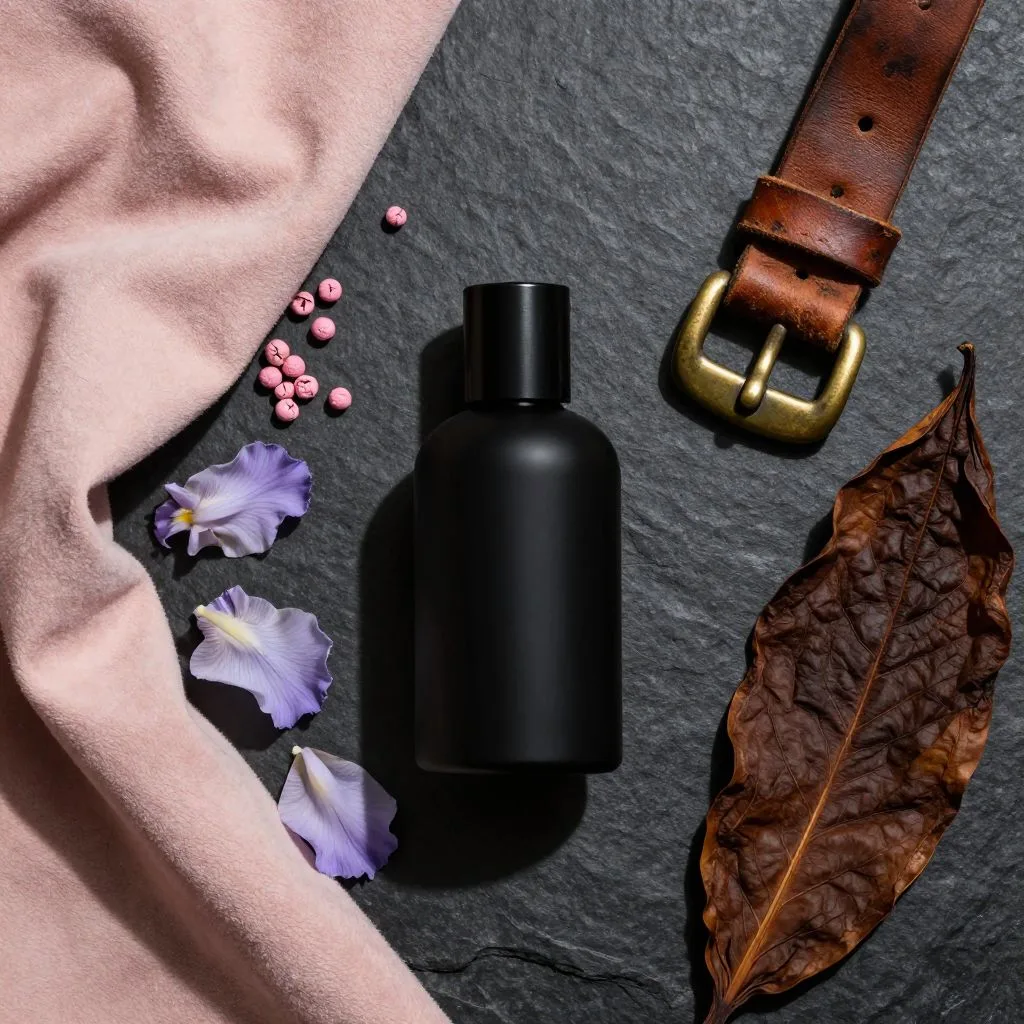
Why leather perfumes for women so often smell like suede
Most mainstream brands are not trying to sell a raw saddle accord to a wide female audience. They are trying to sell refinement. So the leather gets buffed down with iris, violet, saffron, raspberry, white musk, or creamy woods until it reads as suede, handbag lining, or expensive gloves rather than tack room.
That is not false advertising exactly. Suede is still part of the leather family. But it is a very specific branch of it - softer, quieter, less smoky, and usually easier to wear in close settings.
Tom Ford Ombre Leather is a useful example because it sits closer to the tougher side, with jasmine sambac over a dark leather structure. Bottega Veneta Eau de Parfum, by contrast, became a reference point for supple, elegant leather with patchouli and a plum-like softness. Both count as leather. They are not remotely the same buy.
That is the first trap. Buyers hear the family name and assume one smell profile.
The note list that usually predicts a soft leather drydown
If the note pyramid includes iris, violet, heliotrope, raspberry, or white musk, expect the leather to wear smoother and more cosmetic. If it includes birch tar, castoreum-style effects, cade, labdanum, or heavy smoke, the leather will usually feel drier, darker, and harder to mistake for suede.
Not every brand publishes a complete note breakdown, and note lists are not formulas. Still, they help. A leather perfume with saffron and jasmine may turn plush. A leather perfume with incense and styrax may turn stern fast.
- Usually reads as suede: iris, violet, raspberry, osmanthus, soft musk
- Usually reads as full leather: birch tar, cade, labdanum, smoke, castoreum-style accords
- Can go either way: saffron, patchouli, rose, amber
- Often hides the leather: strong vanilla or sweet fruit
A non-obvious problem: a perfume can be stronger yet feel less leathery. Loud projection from amber, fruit, or musk can blur the leather impression instead of sharpening it.
Where buyers get misled in stores and on retail pages
Retail copy loves the idea of leather. It signals confidence, sensuality, and luxury in one word. But in department-store perfumery, "leather" often means only a textural accent in the heart or drydown, not the core identity of the scent.
This gets worse online. A product page at Sephora, Nordstrom, or Harrods may place leather high in the description because it sounds distinctive, while the actual wear is mostly floral amber with a suede tint after 30 minutes. Blind buyers then think leather as a category is not for them, when the real issue is that they never smelled a truly leather-led composition.
The concentration can mislead too. An eau de parfum may last 6 to 8 hours and still not deliver a strong leather effect if the formula is built around musks and polished woods. Longevity is not the same thing as character.
How to tell suede leather from saddle leather before you buy
Use the first 20 minutes and the 2-hour mark. Both matter. The opening can be bright or floral, but by 20 minutes you should know whether the leather is merely smoothing the perfume or actually steering it. By 2 hours, a true leather scent still shows grain, dryness, smoke, ink, or skin-like depth.
Test on skin, not blotter alone. On paper, suede can seem thinner and cleaner than it will on skin, while darker leather materials can seem harsher than they end up wearing.
Look for these signals:
- The leather disappears under rose, fruit, or vanilla after 15 to 30 minutes
- The scent feels velvety rather than dry
- The finish suggests handbag, glove, or cosmetic pouch, not jacket or saddle
- The base turns musky-clean instead of smoky or resinous
- You smell "soft luxury" before you smell leather
If that is what you want, great. But call it suede and buy accordingly.
I've noticed that shoppers who say they want "something bold and leathery" often light up more around a balanced suede like Bottega Veneta than around a harsher style from Memo Paris or a smoke-heavy niche release. The mistake is not liking suede. The mistake is expecting the label to sort that out for you.
Which leather perfumes for women actually lean leather-first?
Start with a firmer benchmark so your nose has contrast. Tom Ford Ombre Leather is an accessible reference sold in 50 ml and 100 ml sizes, often around the premium designer price tier. It is not the roughest leather on the market, but it does put leather in front rather than hiding it behind sugar or powder.
Memo Paris Irish Leather pushes greener, sharper, more aromatic leather and can feel too assertive for someone expecting softness. That is the trade-off. It gives clarity, not comfort. Miller Harris La Feuille is not a classic leather reference, so skip that route if what you want is certainty. Better to test obvious examples first.
For suede done well, Bottega Veneta Eau de Parfum remains one of the clearest examples of how elegant leather can be without going airy and anonymous. If you want saddle, though, do not start there.
My recommendation is blunt: anyone shopping leather perfumes for women for the first time should test one suede-leaning scent and one stricter leather on the same day. Without that side-by-side, marketing language wins too easily.
Should beginners avoid blind-buying leather perfumes for women?
Yes. More than with citrus, vanilla, or clean musk.
Leather perfumes for women sit in a category where texture matters as much as notes, and texture is exactly what online descriptions flatten. A 2 ml sample or one department-store visit is cheaper than getting stuck with a 75 ml bottle that smells like violet suede when you wanted smoke, or smells like smoke when you wanted polish.
The limitation is obvious. Sampling takes time, and not every town has access to niche counters. But blind-buying leather is where expensive mistakes pile up fastest, because "leather" covers too much ground.
Are leather perfumes for women supposed to smell feminine?
Usually they are built to smell polished rather than gendered in any fixed way. In commercial perfumery, feminine-leaning leather often means leather rounded by florals, fruit, suede effects, or powder. It does not mean weak. It means edited.
That is why the label can confuse people. The market teaches buyers to read leather as bold and rugged, then hands them softened compositions with rose, osmanthus, or musk. Maybe the better question is not whether the perfume is feminine, but whether the leather is still audible once everything pretty has been added.