You spray a vanilla perfume expecting cake, cream, or soft sugar. Two hours later, it smells darker, drier, and faintly burnt. That shift is real, and in most cases it is not your imagination. The short answer is this: a vanilla scent turns smoky in the drydown because the sweet top and heart notes fade first, leaving woods, resins, musks, patchouli, or burnt-sugar materials more exposed on skin.
If you want a vanilla that stays soft and dessert-like, skip bottles built around amber, incense, oud, leather, or heavy woody bases. Start there.
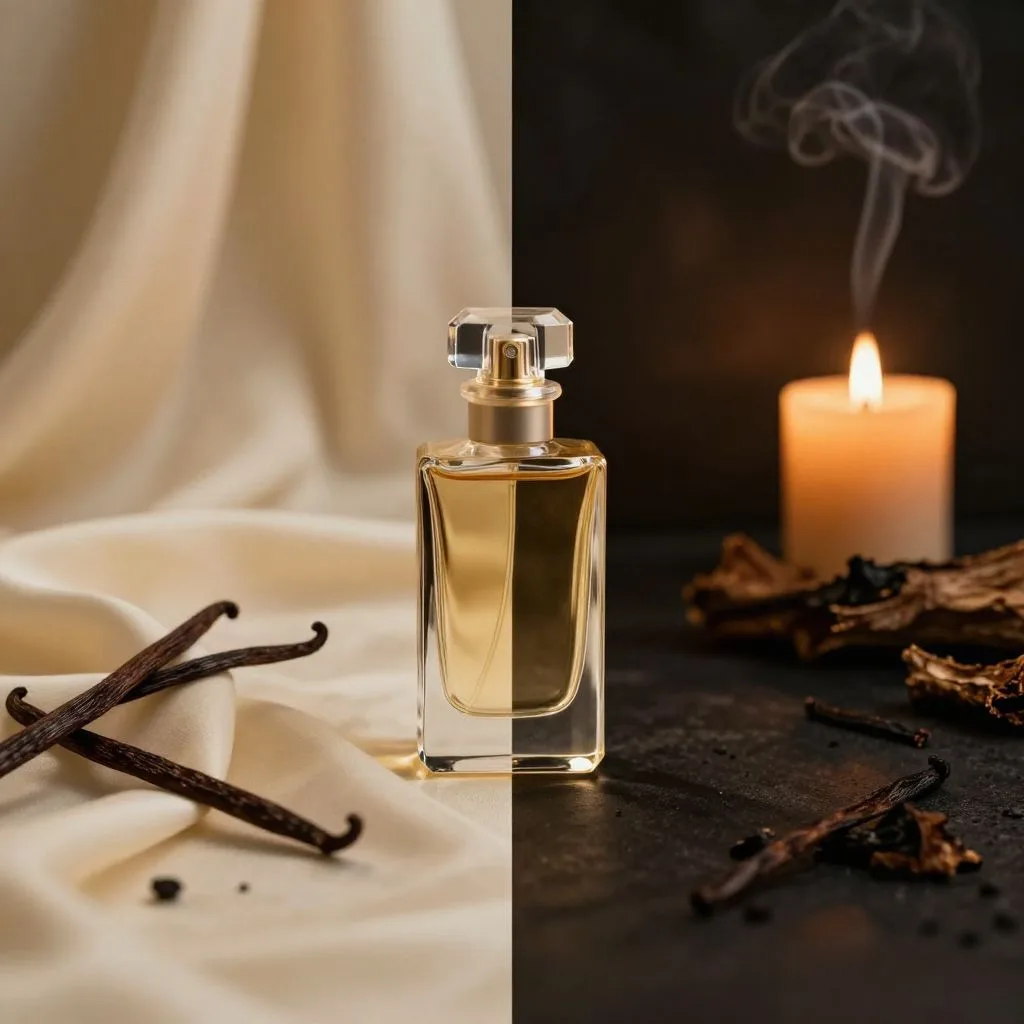
Why vanilla perfumes turn smoky instead of sweet after 2 hours
Vanilla as a note is rarely just vanilla. In perfume, it is usually paired with support materials that give it shape and longevity. Those supports are often less sugary than the opening suggests. A fragrance can open with pear, heliotrope, orange blossom, or caramel, then settle into labdanum, patchouli, guaiac wood, benzoin, or cashmeran. Once the brighter parts burn off, the base shows itself.
This is why two perfumes with "vanilla" on the note list can behave very differently. Kayali Vanilla 28, for example, has a brown-sugar amber feel that can read boozy and woody on some skin. By contrast, a scent like Prada Candy tends to hold onto its candy-shop sweetness longer, even though it still has depth underneath.
Heat matters too. So does skin moisture. On warm, dry skin, sweeter volatile notes can disappear fast, sometimes within 90 to 120 minutes, leaving the denser base materials behind.
Which ingredients usually cause the smoky vanilla effect?
The usual culprits are not the vanilla molecules themselves. They are the notes built around them.
- Patchouli - adds earth, chocolate, and a dusty darkness that can read smoky in a vanilla blend
- Labdanum and amber accords - create warmth and resin, but can turn leathery or tar-like on skin
- Guaiac wood - naturally smoky, dry, and slightly charred
- Incense or olibanum - beautiful in moderation, but quick to pull vanilla away from dessert territory
- Burnt sugar, maltol, and caramelized accords - these smell edible at first, then can lean bitter or toasted later
A good example is Maison Margiela By the Fireplace. It contains vanilla, but nobody should buy it expecting plain sweetness. The chestnut, woods, and smoke are the point. Less obvious cases are trickier, because the bottle is marketed as cozy or gourmand while the base is doing something much drier.
This is also where concentration can mislead you. Eau de parfum versions often hold onto base notes longer, which improves wear time but can make the smoky phase more obvious.
Skin chemistry changes the balance faster than note lists suggest
Most people read note pyramids too literally. The real issue is evaporation plus skin interaction. Vanilla perfumes do not unfold in neat layers on everyone.
Acidic skin, dry skin, body heat, and even unscented lotion can change what gets amplified. A vanilla with benzoin may smell creamy on one person and resinous on another. Add patchouli, and the gap gets wider. This is one reason blind-buying vanilla is riskier than the marketing makes it sound.
I've noticed this most with perfumes described as "cozy" or "warm gourmand." On paper strips they stay fluffy. On skin, especially after a rushed morning application, the sugar drops away and the wood smoke steps forward. The surprise is not that the perfume changed. The surprise is how much the blotter hid.
Fabric changes things as well. On a scarf or sweater, sweet notes may linger longer than they do on skin. That can make the same fragrance smell softer on clothes and smokier on your neck or wrists.
How can you tell before buying that a vanilla will dry down smoky?
Look past the word vanilla. Check the base notes and the brand's style.
If the note list includes incense, oud, suede, patchouli, guaiac wood, cade, labdanum, tobacco, or "amber woods," expect less pastry and more shadow. Houses like Tom Ford, Serge Lutens, and Maison Margiela often lean comfortable with darker facets. That is not a flaw. It just is not the same category of sweetness as a soft vanilla musk from a more mainstream designer line.
Retailer descriptions help less than people think. Sephora and department store copy tends to emphasize edible notes because they sell faster. The base is where the truth usually sits.
- Test on skin, not only paper.
- Wait at least 3 hours.
- Try 2 sprays, not 6.
- Test once on bare skin and once over plain moisturizer.
That takes more time, but it saves money. A 50 ml bottle in the $90 to $160 range is too expensive to judge in the first 15 minutes.
Which vanilla perfumes stay sweeter longer?
Look for compositions built around musk, tonka, praline, heliotrope, or soft florals instead of smoke and resin. Prada Candy is one. Billie Eilish Eilish also leans sugary and plush for longer than darker amber-vanilla scents. Philosophy Fresh Cream Warm Cashmere usually stays in the comforting lane too, though its sweetness can feel flat if you want complexity.
The trade-off is clear. Sweeter vanillas can feel more linear and less refined over time. The smoky ones often smell more interesting, just less edible.
My recommendation is blunt: if you dislike a smoky drydown, avoid "sexy vanilla" marketing language. It often signals woods, amber, spice, or incense under the sugar.
Can you stop a smoky vanilla perfume from turning smoky?
Not completely. You can only nudge the balance.
Apply over unscented moisturizer to slow evaporation. Use fewer sprays on warm skin. Put 1 spray on clothing if the fabric is safe for fragrance, because cloth can hold the sweeter top and heart longer. And do not layer with woody body cream or smoky hair mist unless you want to push the problem further.
A limitation here is obvious: if the perfume base is built on incense, woods, or dark amber, no trick will turn it into a cupcake. Application changes the volume, not the architecture.
Why does vanilla smell sweet on paper but smoky on skin?
Paper is inert. Skin is warm, oily, salty, and inconsistent. On a blotter, evaporation is slower and cleaner. On skin, certain materials bloom faster while others sink in and linger. That is why a blotter test at a counter in Selfridges or Sephora can give you only half the story.
This is also why stronger performance is not always better. A long-lasting base can make a perfume feel harsher if the phase you dislike is the one that lasts 6 hours.
FAQ
Why does my vanilla perfume smell burnt after a few hours?
Usually because burnt-sugar accords, patchouli, resin, or smoky woods are left behind after the sweeter opening fades. The perfume may have been built that way on purpose.
Can dry skin make vanilla perfume smell less sweet?
Yes. Dry skin often lets top notes vanish faster, which can expose darker base materials earlier. Moisturizing first can help the sweeter phase last a bit longer.
Do gourmand perfumes always stay sweet in the drydown?
No. Gourmand marketing can hide woody, ambery, or smoky bases. A perfume can open like dessert and finish like toasted wood or resin.
Is smoky vanilla a sign that the perfume has gone bad?
Not usually. Oxidation can change a perfume, but a smoky drydown is more often part of the formula. Check whether the bottle always behaved that way before assuming spoilage.
Which notes should I avoid if I want a purely sweet vanilla perfume?
Avoid incense, guaiac wood, cade, oud, heavy patchouli, leather, and dark amber accords. Look instead for musk, praline, tonka, marshmallow, heliotrope, or milk notes.
Sometimes the perfume is not turning against you - it is finally showing you what it actually is.